
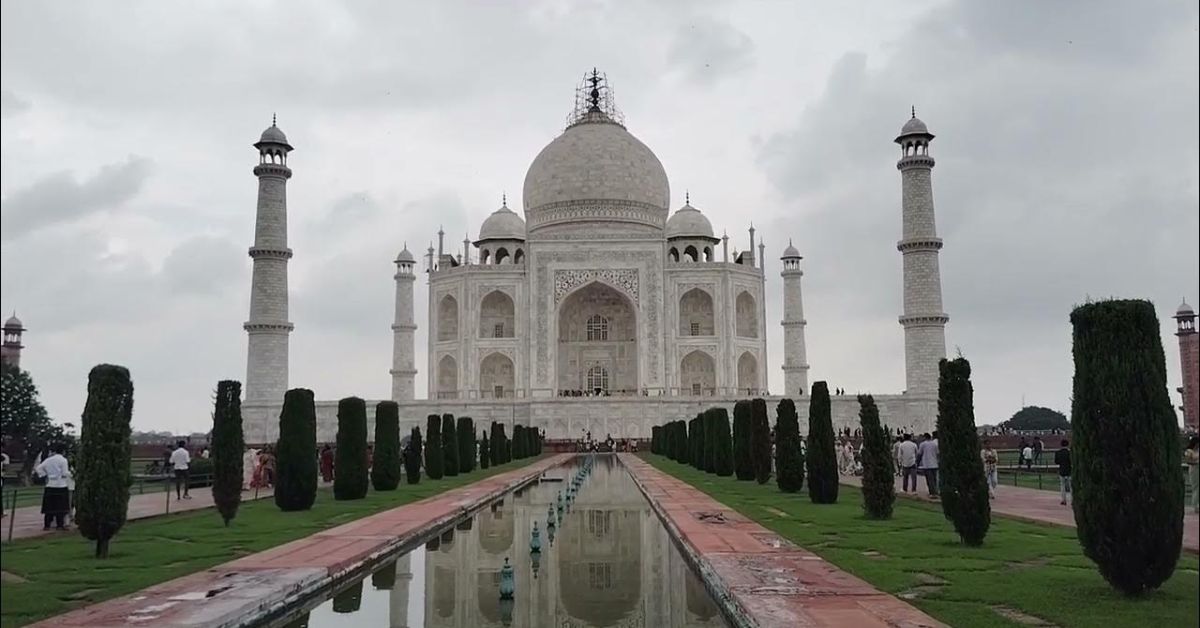
The moment you see the Taj Mahal, you understand why it is called Taj Mahal: The Most Famous Tourist Attraction in India. This isn’t just a monument standing quietly in the city of Agra. It is a symbol of love, artistic brilliance, and centuries of history carved into white marble. For American travelers, visiting the Taj Mahal often feels like checking off a lifelong dream. You may have seen it in photos, documentaries, or travel magazines. Still, nothing prepares you for the real experience.
Set along the Yamuna River, the Taj Mahal reflects changing colors throughout the day. At sunrise, it glows soft pink. By midday, it shines bright white. At sunset, golden hues wrap around its dome. That transformation alone makes it one of the most photographed buildings in the world. The monument draws millions of visitors each year, making it the most famous tourist attraction in India and one of the most recognized landmarks globally. Travelers from the United States often compare its cultural importance to the Statue of Liberty. However, the Taj Mahal offers something more intimate. It tells a love story written in stone.
History of the Taj Mahal
The History of the Taj Mahal begins with deep love and deep loss. In 1631, Mughal emperor Shah Jahan lost his beloved wife Mumtaz Mahal during childbirth. Heartbroken, he promised to build the most beautiful tomb the world had ever seen. Construction began in 1632 and continued for more than twenty years. Over 20,000 craftsmen, artisans, and laborers worked tirelessly to complete this masterpiece.
The Taj Mahal represents the height of Mughal architecture, blending Persian, Islamic, and Indian styles into perfect harmony. Materials came from across Asia. White marble arrived from Rajasthan. Precious stones such as jade and turquoise were imported from distant lands. The scale of the project showed the power and wealth of the Mughal Empire at its peak. In 1983, UNESCO declared it a World Heritage Site, recognizing its universal cultural value.
To understand the historical timeline clearly, consider the following table:
| Year | Major Event |
|---|---|
| 1631 | Death of Mumtaz Mahal |
| 1632 | Construction begins |
| 1648 | Main mausoleum completed |
| 1653 | Entire complex finished |
| 1983 | Declared UNESCO World Heritage Site |
This timeline shows that the Taj Mahal was not built overnight. It required vision, engineering skill, and decades of dedication.
Why the Taj Mahal Is Famous Around the World
When discussing Why the Taj Mahal Is Famous Around the World, the answer goes beyond romance. Yes, it is a monument built for love. However, its global fame comes from its flawless symmetry, architectural perfection, and cultural symbolism. The central dome rises about 240 feet high and stands balanced by four minarets. Every angle feels carefully measured.
The Taj Mahal also appears consistently in global travel rankings. It stands beside icons like the Eiffel Tower in worldwide recognition. Yet unlike many landmarks built for political power or military victory, the Taj Mahal was built for love. That emotional connection resonates deeply with visitors.
A fascinating fact often surprises travelers. The calligraphy on the main gateway appears uniform in size. In reality, the letters increase gradually as they move upward. This optical illusion makes the script look perfectly balanced from ground level. Such intelligent design decisions explain why architects and historians still study this monument centuries later.
Architecture and Design of the Taj Mahal
The Architecture and Design of the Taj Mahal reveal extraordinary precision. The monument follows a strict geometric layout. The complex includes the main mausoleum, a mosque, a guest house, and formal gardens divided into symmetrical sections. Water channels reflect the structure, creating a mirror image that doubles its beauty.
The white marble exterior features delicate inlay work known as pietra dura. Artisans carved floral patterns and inserted semi-precious stones into the marble surface. These stones include lapis lazuli, jasper, and carnelian. Even after centuries, the details remain sharp and vibrant. Engineers also designed the minarets to lean slightly outward. This subtle tilt protects the main tomb in case of an earthquake.
To better understand its design elements, review the table below:
| Feature | Description |
|---|---|
| Central Dome | 240 feet high, onion-shaped design |
| Minarets | Four towers positioned symmetrically |
| Gardens | Persian-style Charbagh layout |
| Inlay Work | Semi-precious stone floral patterns |
| Calligraphy | Quranic verses with optical illusion scaling |
The Taj Mahal proves that beauty and engineering can coexist. Every structure aligns perfectly along a central axis. Even small decorative details follow strict symmetry rules.
Best Time to Visit the Taj Mahal
Choosing the Best Time to Visit the Taj Mahal can shape your entire experience. For American tourists, the most comfortable months are from October to March. During this period, temperatures remain cooler, making long walks around the complex enjoyable. Summer temperatures in Agra can exceed 100°F, which may feel overwhelming for visitors unfamiliar with extreme heat.
Early morning visits offer softer light and smaller crowds. Sunrise creates magical reflections in the water channels. Winter mornings may bring light fog, adding a dreamy atmosphere. Monsoon season runs from July to September, bringing humidity and occasional rainfall. While rain can reduce crowds, it may also limit visibility.
The table below summarizes seasonal conditions:
| Season | Weather | Visitor Experience |
|---|---|---|
| Oct–Mar | Cool and pleasant | Ideal for sightseeing |
| Apr–Jun | Very hot | Fewer tourists but intense heat |
| Jul–Sep | Humid and rainy | Moderate crowds |
Planning ahead ensures a smoother visit. Booking tickets in advance reduces waiting time and guarantees entry during your preferred time slot.
How to Reach the Taj Mahal
Understanding How to Reach the Taj Mahal makes travel easier for US visitors. Most travelers fly into New Delhi, which serves as the main international gateway. From there, Agra lies about 130 miles away. High-speed trains such as the Gatimaan Express connect Delhi to Agra in roughly two hours. Private cars and guided tours also provide convenient options.
Some travelers choose domestic flights to nearby cities. However, train travel remains popular due to comfort and efficiency. Roads between Delhi and Agra are well maintained, making car journeys smooth. Organized tours often include hotel pickup, entry tickets, and professional guides. This option works well for those who prefer structured itineraries.
Travel time comparison appears below:
| Departure City | Travel Method | Approximate Time |
|---|---|---|
| New Delhi | High-speed train | 2 hours |
| New Delhi | Car | 3–4 hours |
| Mumbai | Flight to Delhi then train | 5–7 hours total |
With proper planning, reaching the Taj Mahal becomes straightforward and stress free.
Travel Tips for Visiting the Taj Mahal
Smart preparation enhances your experience. These Travel Tips for Visiting the Taj Mahal help you avoid common mistakes. Visitors must pass through security checks before entering. Large bags and tripods are restricted. Wearing modest clothing shows respect because the Taj Mahal is a mausoleum.
Tickets can be purchased online through the official website https://www.tajmahal.gov.in which helps avoid long lines. Hiring a licensed guide adds depth to your visit. Guides explain hidden design details and historical anecdotes that many tourists miss.
Photography enthusiasts should arrive early for clear reflections. Comfortable walking shoes are essential because the complex covers a large area. Hydration matters especially during warmer months. Keeping these practical tips in mind ensures that your visit feels smooth rather than stressful.
Cultural Etiquette and Visitor Experience at Taj Mahal: Th e Most Famous Tourist Attraction in India
Respect shapes the overall atmosphere at the Taj Mahal. Speaking softly, avoiding littering, and following posted guidelines protect this historic treasure. Visitors remove their shoes or wear protective covers before entering the inner tomb chamber. Such practices preserve the marble floors and maintain cleanliness. When travelers approach the monument with patience and appreciation, they often leave with deeper emotional memories rather than just photographs.
May Also Read: Ultimate Travel Guide: Explore the World with Smart Planning in 2026
Conclusion
Standing before the Taj Mahal feels surreal. Its story of love, loss, and artistic brilliance explains why it remains Taj Mahal: The Most Famous Tourist Attraction in India. From its fascinating History of the Taj Mahal to the breathtaking Architecture and Design of the Taj Mahal, every detail tells a story.
For American travelers seeking culture, beauty, and meaning in one destination, the Taj Mahal delivers on every level. Plan wisely, choose the Best Time to Visit the Taj Mahal, understand How to Reach the Taj Mahal, and follow practical Travel Tips for Visiting the Taj Mahal. When you finally stand beneath its grand dome, you won’t just see a monument. You’ll feel history come alive.