
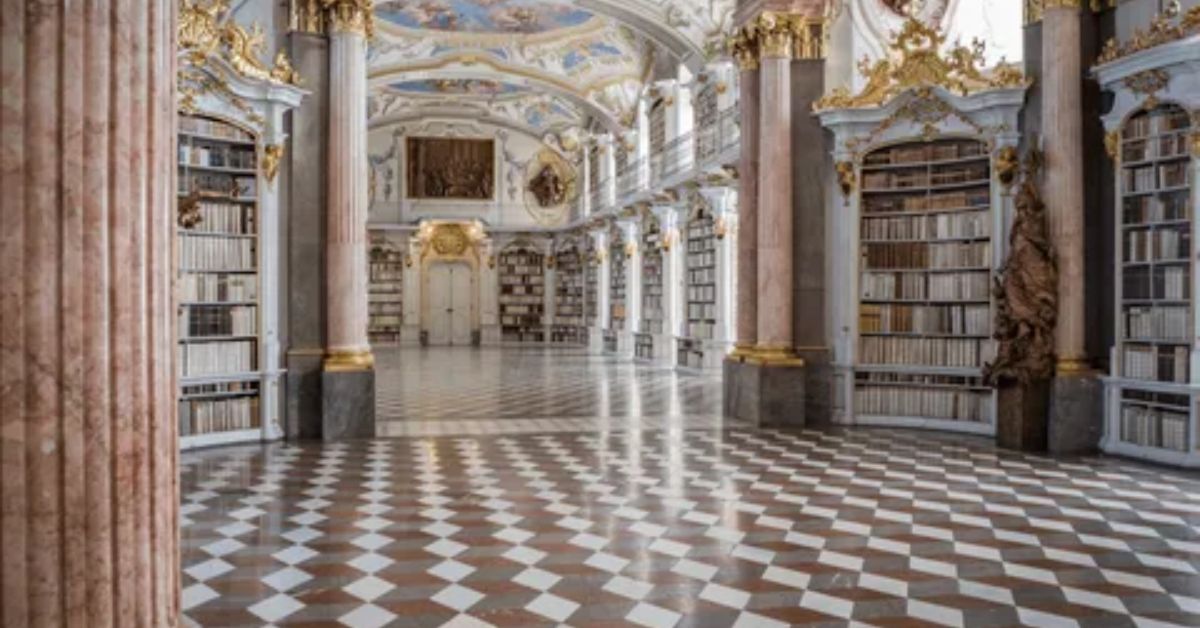
Walking into the Stunning Admont Abbey Library: Fairy Tale Location in Austria feels like stepping inside a dream that somehow became real. Tucked away in the quiet town of Admont (Town), this breathtaking space often surprises American travelers who expect castles and alpine lakes but not one of the Beautiful libraries in the world hidden inside a monastery. The moment you enter the vast library hall, sunlight pours through tall windows and dances across white-and-gold walls, instantly creating the feeling of a Fairy tale library brought to life. For readers in the USA who love cultural travel, European history, or visually stunning places, the Admont Library Austria delivers an unforgettable experience that blends beauty, silence, and knowledge.
What makes this place even more special is how naturally it combines art, faith, and learning. The Admont Monastery Library, also known as the Stift Admont Library, sits within a working Benedictine monastery, reminding visitors that books were once sacred tools for preserving wisdom. Many travelers compare their emotional reaction here to seeing famous landmarks in Vienna, Salzburg, or Graz, yet this library feels more intimate and magical. Much like how American audiences admire thoughtful renovation stories on shows like Windy City Rehab with Alison Victoria, this historic space shows how design and purpose can exist in perfect balance, only here the renovation happened centuries ago and still feels timeless.
Stunning Admont Abbey Library: Fairy Tale Location in Austria
The Stunning Admont Abbey Library: Fairy Tale Location in Austria is widely known as the Largest monastery library in the world, and once you stand inside, that title makes complete sense. The library hall stretches impressively long, lined with towering shelves filled with Historic books and Ancient manuscripts that reflect centuries of careful preservation. This iconic example of Baroque architecture features elaborate Ceiling frescoes painted by Bartolomeo Altomonte, whose artwork fills the space with movement, symbolism, and light. Every fresco tells a story about faith, wisdom, and human understanding, making the library not just a reading room but a living piece of Art history and Cultural heritage.
Beyond its visual beauty, this Historic library Austria plays an important role in Cultural tourism and education. Scholars, photographers, and casual travelers all find something meaningful here. The harmony between Religious art, architecture, and learning places it among the most Famous libraries Europe has to offer. Unlike many European libraries that feel distant or overly formal, the Admont Abbey interior invites you to slow down and absorb the atmosphere. The silence is comforting, the scale is humbling, and the experience feels deeply human, proving why this library remains one of the most admired Austrian landmarks.
How to Get to Admont Abbey Library?
Understanding How to Get to Admont Abbey Library? is simple, even for first-time visitors from the USA. Admont is located in central Austria (Country), close to the dramatic landscapes of Gesäuse National Park, which adds natural beauty to the journey. Most American travelers arrive via Vienna, Linz, Graz, or Salzburg, then continue by train or car. Driving offers scenic views of mountains and forests, while public transport provides a relaxed way to enjoy the countryside without stress. The trip itself feels like part of the adventure, especially as the monastery slowly comes into view.
Once in town, the Admont Abbey complex is easy to reach on foot. The peaceful surroundings reflect the monastic lifestyle and help visitors mentally prepare for the calm inside the library. For travelers who enjoy pairing culture with nature, visiting the Historic monastery and then exploring nearby hiking trails in Gesäuse National Park creates a balanced travel day. This combination of accessibility and beauty makes the Library travel guide appeal especially strong for American readers planning a meaningful European itinerary.
Quick History of the Abbey Library in Admont
The Quick History of the Abbey Library in Admont begins in the 11th century when the Benedictine Order founded Admont Abbey as a center for learning and spirituality. The library itself reached its current form in the 18th century, during the height of the Baroque period, when monks believed knowledge was a path toward enlightenment. This belief shaped the design of the Monastery library, turning it into a symbol of intellectual freedom rather than secrecy. Over time, the collection grew to include thousands of rare texts, religious writings, and scientific works.
Despite fires and historical challenges, the Historic monastery survived and evolved, becoming a guardian of Ancient book collections and Cultural heritage. Today, the library stands as proof that preservation and progress can coexist. Visitors from around the world admire how the space still serves its original purpose while welcoming modern travelers. This layered history makes it one of the most fascinating Historic places in Austria, especially for those interested in religion, art, and education.
Admont Abbey Library Tickets
Planning your visit starts with understanding Admont Abbey Library Tickets, which offer excellent value for such a rich experience. Admission includes access to the Admont Abbey Library Museum, allowing visitors to explore one of the most complete Museum complex experiences in Austria. Ticket prices remain reasonable compared to other major Cultural attractions Austria, making it accessible for families, solo travelers, and students. Seasonal hours may vary, so checking official sources before arrival is recommended, especially during peak summer travel.
Below is a simple table showin
g what visitors typically receive with admission, helping USA travelers plan efficiently.
| Ticket Feature | Included Access |
| Library Hall | Full entry to the Library hall |
| Museum Areas | Admont Abbey Museum exhibitions |
| Art Collections | Religious architecture Austria displays |
| Gardens | Outdoor monastery spaces |
Photography rules apply in certain areas, preserving the integrity of the space while still allowing visitors to capture memories of this Fairy tale library.
What Else Is Included in the Entrance Tickets
Beyond the library itself, What Else Is Included in the Entrance Tickets adds depth to the visit. Guests can explore the Admont Abbey Church, where spiritual traditions continue daily, and walk through museum halls showcasing Religious art, natural history, and regional culture. These spaces reveal how the monastery functions as more than a library, acting as a guardian of Cultural heritage and education. Each section complements the library experience, offering context and storytelling that deepen understanding.
The museum areas also highlight the monastery’s connection to the surrounding region and its role in shaping Austrian identity. From art exhibitions to historical artifacts, the entire complex feels cohesive rather than fragmented. This thoughtful integration places Admont among the most rewarding Hidden gems Austria, especially for travelers who value meaning over crowds and depth over speed.
May Also Read: Fukuoka Castle (福岡城) – Ruins, Views, and Seasonal Beauty
Final Thoughts
In these Final Thoughts, it becomes clear why the Stunning Admont Abbey Library: Fairy Tale Location in Austria continues to captivate visitors from the USA and beyond. This remarkable space blends Baroque interior design, Fresco paintings, and centuries of knowledge into a single, unforgettable experience. Surrounded by the natural beauty of Gesäuse National Park, the library feels both grand and peaceful, making it a standout among Historic places in Austria.
For travelers seeking more than surface-level sightseeing, the Admont Monastery Library offers inspiration, reflection, and wonder. It proves that some of the world’s most magical places are quiet, thoughtful, and filled with books. In a world that often moves too fast, this Historic library invites you to slow down, look up, and appreciate how human creativity can truly stand the test of time.